A single platform for the whole SME
- All business data in a single shared database
- Native connection between sales, inventory, manufacturing and accounting
- Real-time dashboards for the manager
Service 1 — Lexa ERP
Lexa ERP centralises accounting, sales, inventory, manufacturing, HR and e-commerce in a single platform built on Odoo. Built-in Tunisian tax compliance, sovereign hosting by default, local support in French and Arabic.
Lexa ERP is the Tunisian alternative to international ERPs (SAP Business One, Sage 100, Microsoft Dynamics 365 Business Central). Built on Odoo's technology foundation — used by more than 12 million people worldwide — it is adapted to the operational, tax and language constraints of the Tunisian market. Economic model: a one-time licence and an annual maintenance contract.
Tunisian chart of accounts, VAT, withholding tax, CNSS declarations, compliant invoice formats.
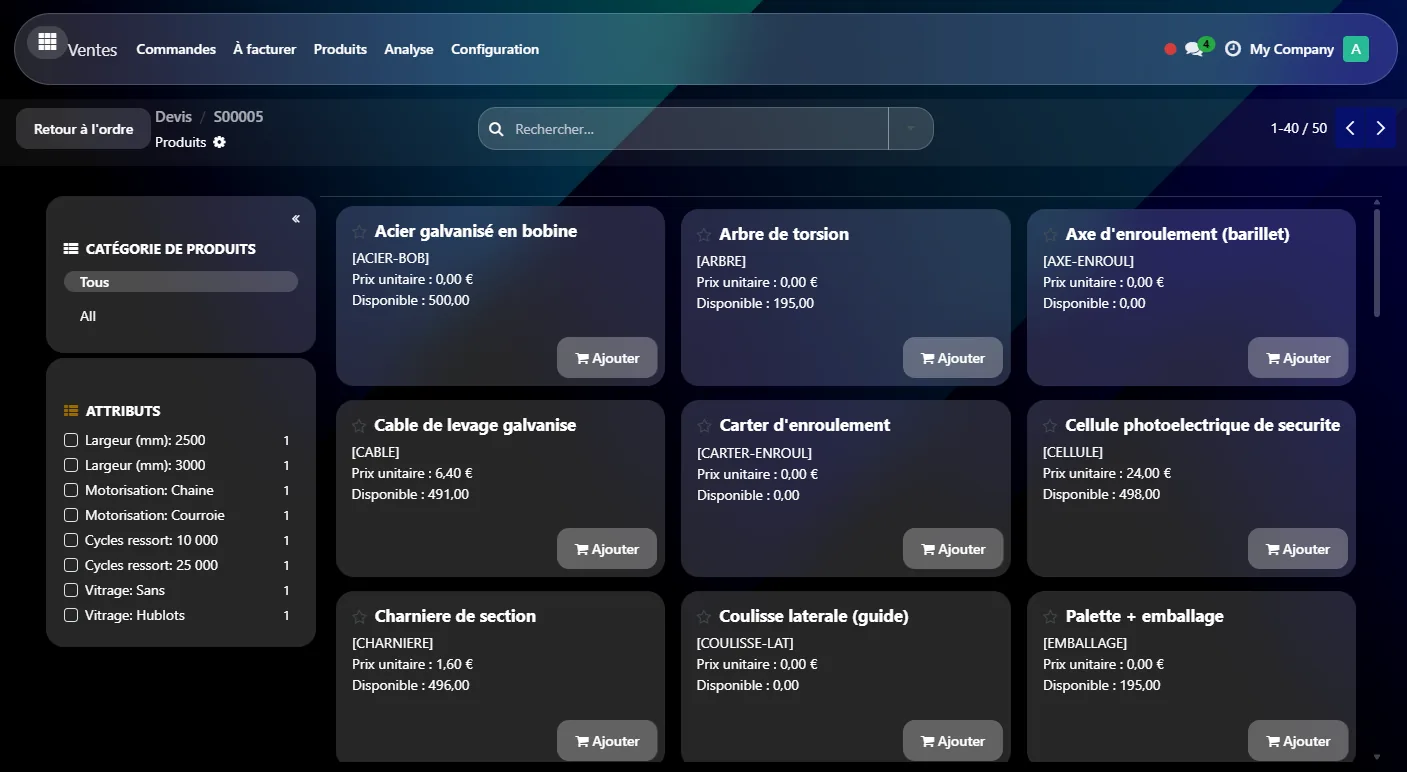
Pipeline, quotes, orders, invoicing, per-customer pricing, commercial terms.
Multi-warehouse, batch traceability, cycle counting, automatic replenishment.
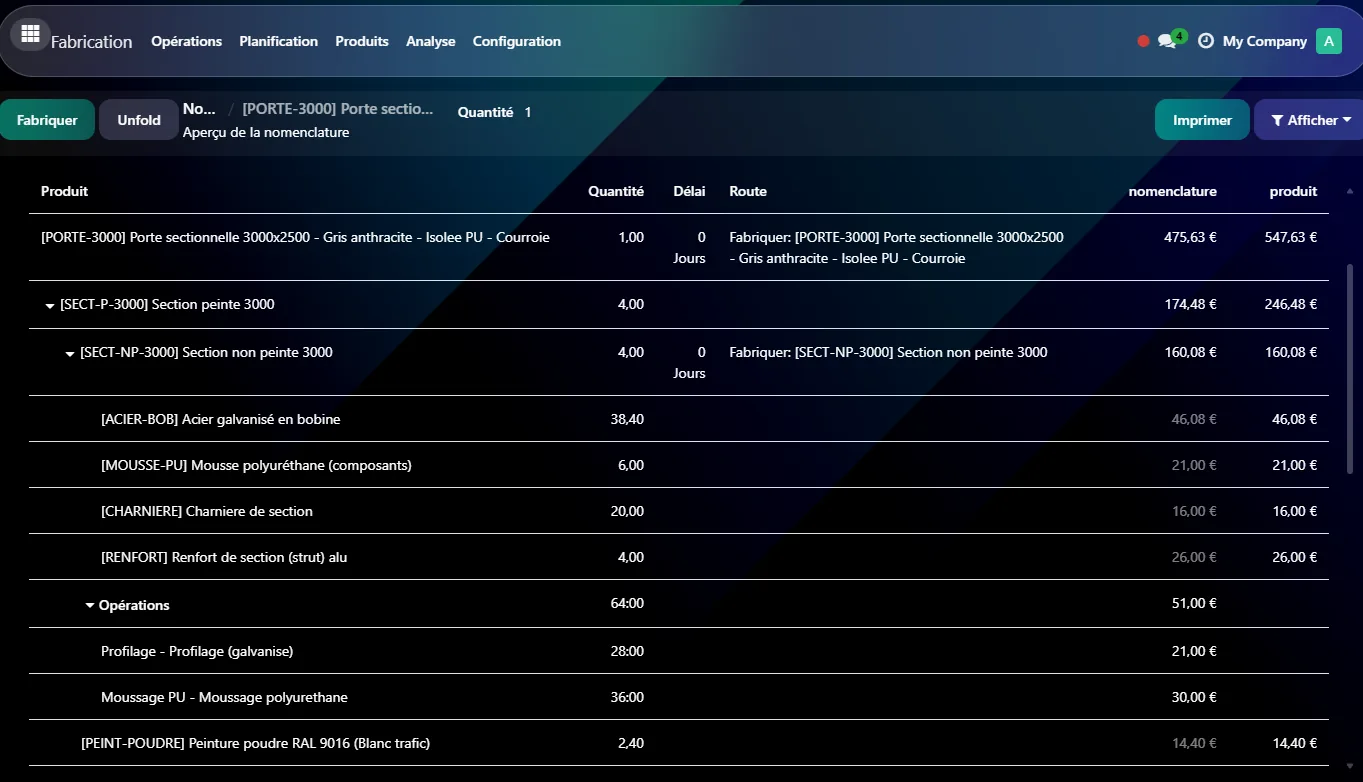
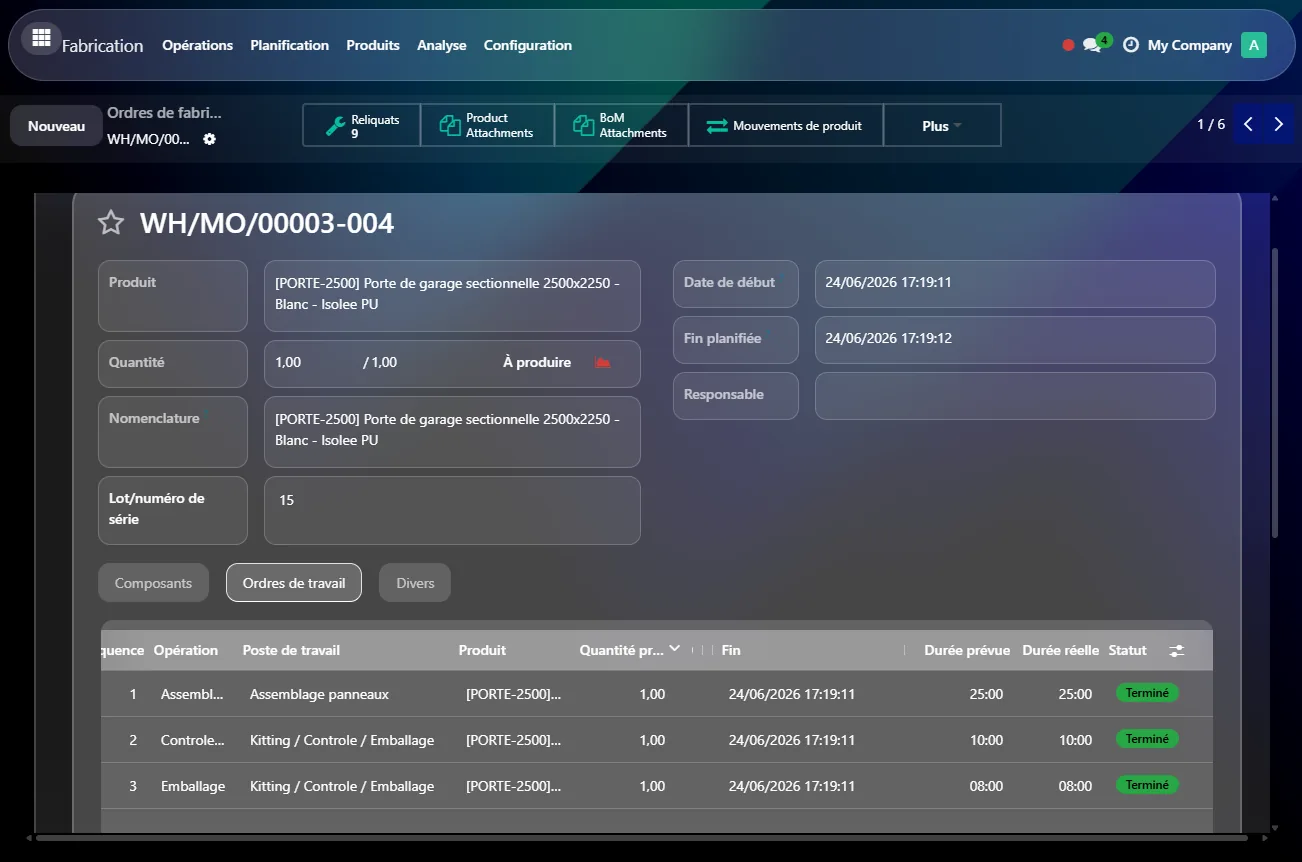
Manufacturing orders, multi-level bills of materials, product configurator, routings and work centres, subcontracting, quality control plans, shop-floor OEE.
Contracts, leave, social declarations, compliant payslips.
Store sharing the ERP's product and stock base, marketplaces, online payment.
The recurring pain points we see in Tunisian SMEs — and their concrete impact on the business.
Double entry between accounting, sales, inventory and manufacturing. The figures diverge from one system to the next.
The per-user cost doubles with your team. With no alternative, you're stuck with unilateral annual increases.
An approximate chart of accounts, patched-together withholding tax, CNSS declarations outside the system. Risk of a tax reassessment.
Legal dependence on a vendor you have no way to influence. A major problem for regulated sectors.
Every business adaptation is costly and slow. The vendor can refuse or raise its prices.
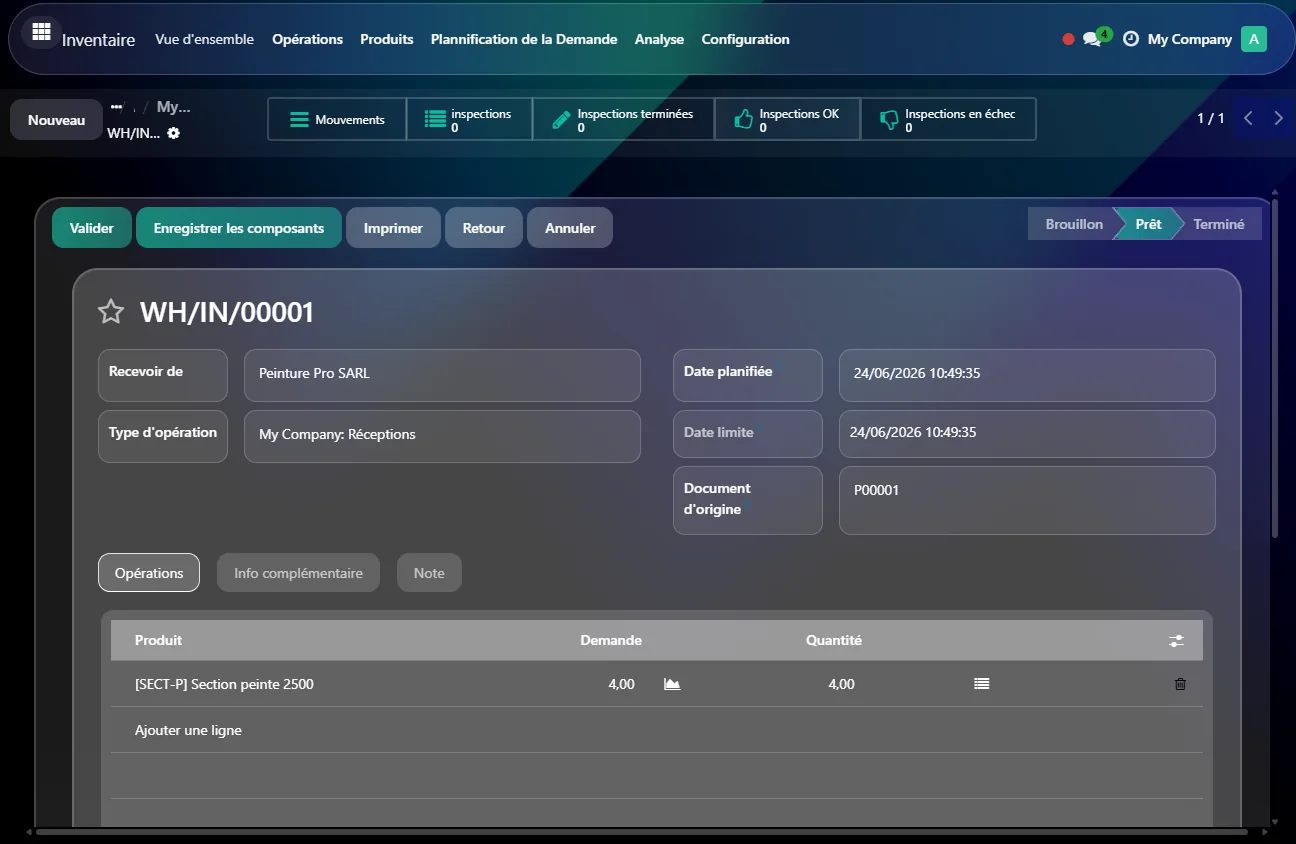
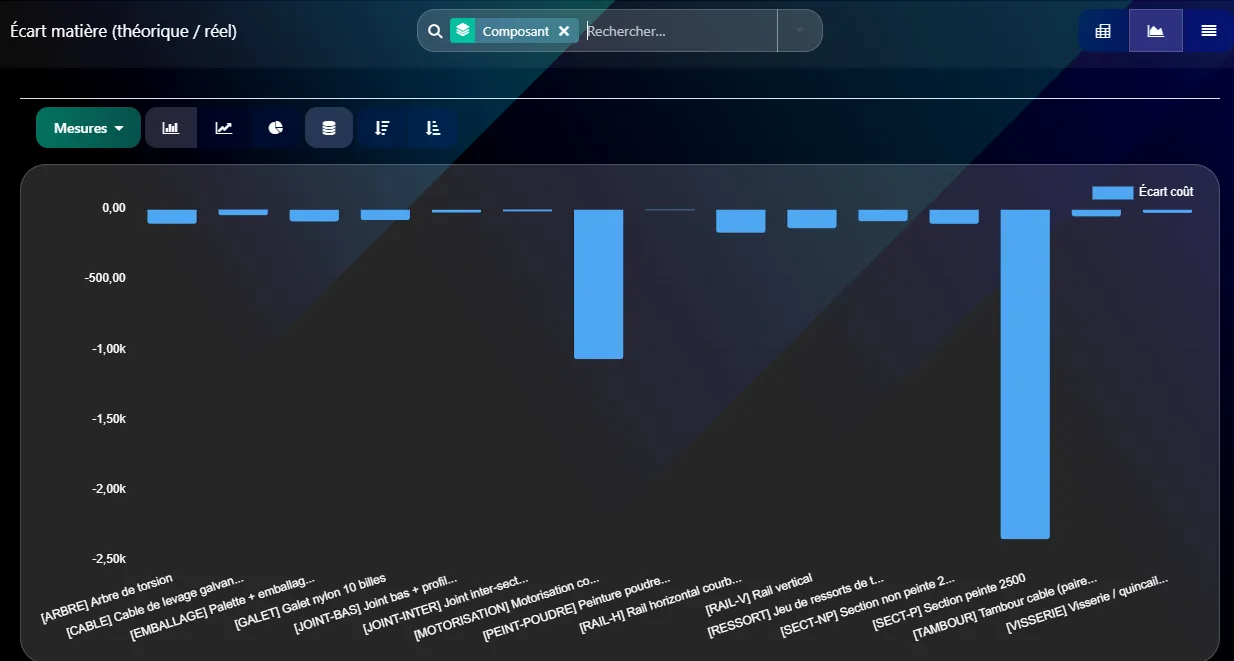
Real screenshots of the product, not mockups.
versus 70% on average before deployment
reduction in tied-up capital and losses
instead of several weeks of manual reconciliation
full genealogy, from received component to delivered customer
Four concrete differences that matter when it's time to choose.
No intermediary between you and the vendor. Support in French and Arabic, on-site visits possible, a dedicated point of contact per project.
Pre-configured adaptations for industry, services, healthcare, distribution and tourism. Not months of initial configuration.
Before any commercial proposal, Lexa audits your processes. You leave with a clear diagnosis, whether or not you sign.
Scoping, configuration, training, maintenance: a single contact throughout the cycle, from the first conversation to several years after go-live.
Indicative estimate for a Tunisian SME. Each project gets a detailed quote after the free scoping audit.
15,000 – 25,000 TND
one-time payment, in milestones
1,500 – 5,000 TND / module
depending on your specifics
6,000 TND / year
all inclusive
Amounts excluding tax, indicative, in Tunisian dinars — no foreign-currency licence, no per-user cost. The exact scope is quoted after scoping.
The questions managers ask us most often on this topic.
Odoo delivers a generic technology base; Lexa ERP is that base enriched for the Tunisian market: pre-configured Tunisian chart of accounts, automated withholding tax, local bank integrations, ready-to-use sector modules (industry, healthcare, distribution, tourism, services), and support in French and Arabic from a team based in Tunis. You don't buy a puzzle to assemble, you buy a system already configured for your context.
As a guide, implementing Lexa ERP for a Tunisian SME represents a one-time investment of 15,000 to 25,000 dinars (scoping, configuration, data migration, training, go-live support), plus an annual subscription of around 6,000 dinars covering unlimited users, hosting, updates and support. Optional custom developments are quoted between 1,500 and 5,000 dinars per module. Lexa offers a free audit that leads to a precise, no-commitment quote.
A standard Lexa ERP deployment is operational in 60 to 90 days, following a five-phase methodology: scoping, configuration, custom developments, migration and testing, then supported on-site go-live. Complex projects (multi-site, many integrations) can take up to six months. For comparison, a SAP Business One or Microsoft Dynamics 365 deployment for an equivalent SME generally takes six to twelve months.
Yes. Lexa ERP includes full manufacturing management: multi-level bills of materials (finished product → sub-assemblies → materials), configure-to-order product configurator, routings by work centre, manufacturing orders with actual vs standard times, traced step subcontracting, automatic cost and margin calculation per product, and scrap analysis by reason and material variance. Planning (MRP) explodes the customer need across all levels and automatically distinguishes what must be manufactured, purchased or subcontracted.
No. Lexa automatically migrates your data from your current system (Excel, Access, SQL Server, MySQL or another ERP): assisted extraction, cleaning and deduplication, then migration in three waves — master data (items, BOMs, customers, suppliers), history, open transactions. Reconciliation tests compare the old and new systems before go-live, and your archives remain accessible read-only for twelve months after the switch.
Yes. Lexa builds integrations with your business software, your e-commerce sites, your point-of-sale systems, your banking tools, your messaging platforms and even your workshop machines (OPC UA, Modbus, MQTT). Lexa ERP becomes the central hub of your information system, without making obsolete the tools you wish to keep.
An annual maintenance contract covers user support, enhancements, security updates and continuous adaptation of the system as your business evolves. Lexa remains your long-term partner: we support the initial deployment, then evolve the system at the pace of your company.
Thirty minutes are enough to understand your context and identify the first opportunities. Free audit, no commitment.